Drinking enough fluid and treating a kidney condition are different questions. We should not describe coconut water as a way to repair kidneys, dissolve stones or remove toxins without evidence for those outcomes.
Start with your own needs
If you have kidney disease or a prescribed fluid limit, follow your care team’s advice. The National Kidney Foundation cautions that coconut water is high in potassium; it is not a universally suitable hydration choice.
Use the label, not a benefits list
Compare serving size and potassium rather than assuming a larger portion is better. You can take a photograph of the label to your appointment and ask how it fits your existing meal plan.
Coconut water can be an enjoyable drink. Whether it fits your routine depends on what is in the product, how much you drink and your individual needs. It is not a treatment for a medical condition.
Start with the label
Check the serving size before comparing calories, carbohydrate, total sugars and minerals. A carton may contain more than one serving. “No added sugar” does not mean sugar-free: FDA guidance distinguishes total sugars from sugars added during processing.
Think about what it replaces
Choosing coconut water instead of another drink is different from adding it to everything you already consume. Compare the actual labels rather than assuming that one category always has less sugar. Plain water is another option when you want a drink without calories.
Know when to ask for individual advice
The National Kidney Foundation identifies coconut water as high in potassium. If you have kidney disease or follow a potassium or fluid restriction, check with your care team before making it a regular drink.
Enjoy it in the kitchen
Try it chilled, or use our measured coconut recipes. For exercise-specific questions, read our sports-drink comparison. Neither serving ideas nor a benefits list can establish a medical result.
Are you curious to know how much water is in a young coconut?
You may have heard that coconuts are full of beneficial nutrients, but do you know just how much liquid they contain?
What’s the difference between a young and mature coconut, anyway?
In this article, we’ll answer those questions and more by exploring the hydration content of a young coconut.
We’ll discuss how much water is in its kernel and flesh, as well as what other essential vitamins and minerals it contains.
By the end of this article, you’ll have a better understanding of the nutritional value and water content of a young coconut.
Let’s get started!
How much water is in one young coconut?
Most young coconut contains between 200 ml and 300 ml of water, depending on its size, or in other words, the equivalent of 6.76 to 10.14 ounces.
A de Coco’s Young Fresh Coconuts contain up to 16 fl oz (473 ml) of liquid per coconut, which is significantly more than the average.
This water is full of essential nutrients like electrolytes and healthy fats, as well as minerals such as magnesium, calcium, phosphorus, and potassium.
These minerals are important for maintaining a healthy body and can help reduce fatigue after exercise or strenuous activity.
Additionally, the water in young coconuts is great for hydrating the body and providing energy.
What is a Young Coconut?
Now that we’ve answered the main question, let’s talk about what a young coconut is and go over the differences between a young and mature coconut.
Young coconuts are harvested shortly after they reach their full size, usually when they’re between three and six months old.
Their husks are softer, the shells are thinner, and the liquid inside is sweeter than it is in an older, more mature coconut.
In addition to being easier to crack open, young coconuts also contain more water and less coconut meat.
The water is lighter and has a sweeter taste than in more mature coconuts.
As for looks, young coconuts have lighter, smoother shells and are often white or yellowish in color.
Frequently asked questions
What is the best way to open a young coconut?
The easiest and safest way to open a young coconut is by using a knife to make a few small cuts in the soft husk.
Place the coconut on a hard surface such as your kitchen counter.
Remove its protective packaging with a knife or something that allows you to cut through.
Cut the fiber at the top until you feel the husk all around the coconut.
Give small stabs at the top in a circular manner and with a circumference of about an inch and a half.
You should now be able to remove it either by using your hands or scooping it with the help of a knife.
Enjoy some delicious and fresh young coconut!
There are multiple ways of doing this, so there’s no right or wrong answer as long as you’re able to ultimately enjoy it!
How long can I keep a young coconut?
Most young coconuts can be stored at room temperature for up to two weeks.
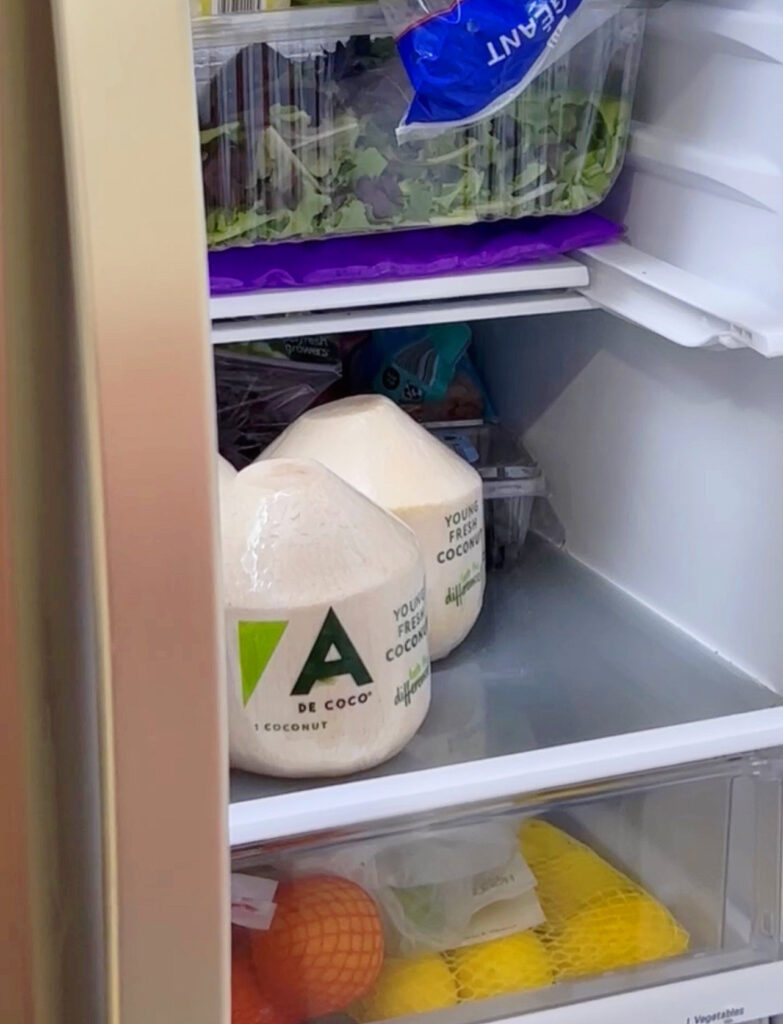
However, it’s best to store them in the refrigerator and consume them within three days of opening.
A de Coco’s Young Fresh Coconuts have a shelf life of up to 90 days if stored in the refrigerator.
This shelf life is a never-before-seen amount and shows just how we’re committed to providing you with the freshest products.
How can I get the most out of a young coconut?
The best way to get the most out of a young coconut is by using it in recipes.
Young coconuts are great for making smoothies, ice creams, and other desserts.
They can also be used to make savory dishes like curries or soups.
You can also use the water in young coconuts to make coconut milk or coconut yogurt.
The flesh is great for adding texture and flavor to recipes, but it’s important to remember that it contains less fat than its mature counterpart.
Is a young coconut safe to drink?
Yes, a young coconut is perfectly safe to drink.
The water in a young coconut is full of essential nutrients and minerals, making it an excellent source of hydration and energy.
It’s also relatively low in calories, so it won’t contribute to weight gain.
It’s important to remember that the water should be consumed within three days of opening, as it can spoil quickly due to naturally occurring enzymes.
A de Coco’s Young Fresh Coconuts have a 7 Days Harvest-to-Market which means they are always fresh and safe to drink.
Conclusion
Now that you know how much water is in a young coconut, the differences between a young and mature coconut, how to open it, and how to store it, you can now confidently enjoy this delicious treat.
Young coconuts are rich in essential minerals and electrolytes that can help keep your body hydrated and energized.
Furthermore, they are extremely versatile and can be used in a variety of recipes.
Make sure to always store them in the refrigerator and enjoy them within three days of opening for the freshest experience!
The ASPCA advises against giving coconut water to pets because it is high in potassium.
Keep fresh water available
Use fresh drinking water as your dog’s usual drink. Coconut milk, coconut oil and coconut water are different products; advice about one does not automatically apply to another.
If your dog has already had some
Contact your veterinarian if you are concerned, especially if your dog has symptoms or a medical condition. Share the product ingredients and the approximate amount consumed so they can assess the situation.
Keep people’s recipes separate
Our coconut recipes are intended for people. Do not assume a human recipe is suitable for a pet.